Phase 1
As a tutorial group we conducted a townscape appraisal as part of the preliminary studies to understand the meaning, character, and identity of the selected site within its urban context. Using the Townscape Assessment Checklist, we analysed the genius loci, sense of place, and townscape qualities through observations and SWOT analysis. Based on our findings, we selected a site and proposed a mini urban intervention that promotes walkability, safety, and inclusivity, while responding sensitively to surrounding activities and seamlessly integrating with the existing urban plaza.


Phase II
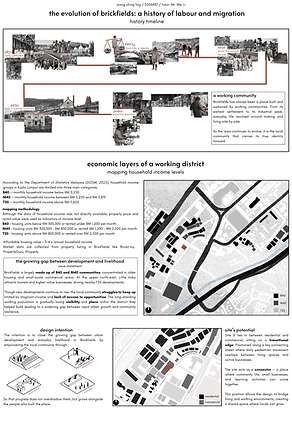
In this phase, I synthesised the findings from Phase 1 to identify key site issues and establish a clear sense of place that informs my approach to architecture for place-making. I analysed the main target user group of the Urban Academy, focusing on empathy towards their needs and daily activities, and translated these insights into design objectives. Through relevant precedent studies, I examined programme, spatial organisation, and circulation strategies, which guided the development of the urban plaza and overall design strategies.


Project IC
I developed a comprehensive architectural and urban space design proposal for an Urban Learning Hub that responds meaningfully to its urban context and community needs. Building on earlier research and site analysis, I translated identified issues into a clear architectural strategy that resolves form, activity, and circulation within a 4 storey building. The design integrates structural, spatial, environmental, services, and regulatory (UBBL and fire requirements) considerations, with a strong emphasis on tropical design and a coherent facade language.


Through this studio, I realised that architecture for place-making is not just about designing a building, but about understanding people, context, and everyday urban life. The process of analysing the site, users, and issues helped me form a clearer position as a designer, where design decisions are grounded in research and empathy rather than form alone. I learned how urban theories, regulations, and technical considerations can work together to strengthen a design narrative instead of limiting it. Overall, this project pushed me to think more critically about how architecture can respond to its surroundings and contribute meaningfully to the urban community.

